
Te Karere Mai Waitangi 2026
Waitangi Day 2026 was celebrated as usual with weeks of prep, planning and kapow!
It was preceded this year with violent storms which took out significant sites, homes and roads and unsettled the summer vibes.
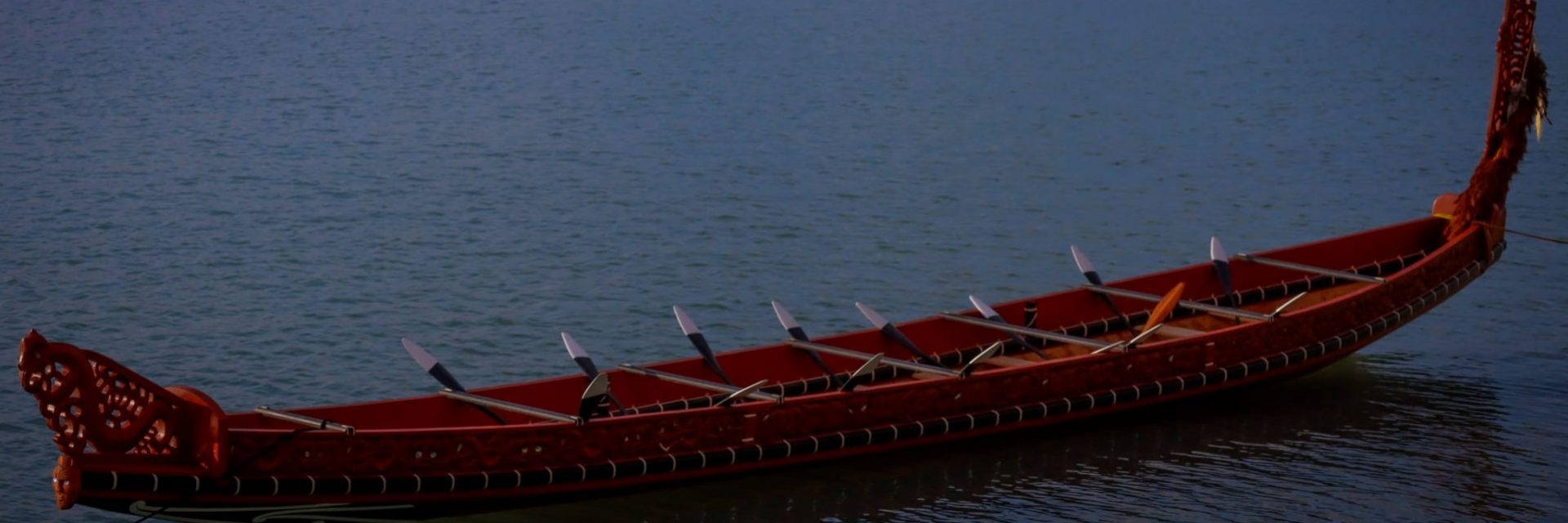
Hihiaua opened on Waitangi Day especially to meet visitors from around Te Moananui a Kiwa, the Pacific Ocean, who had travelled here to further spread the essential messages regarding climate change and protection of the oceans under the banner of Taiatea. They had conducted a symposium in the forum tent at Waitangi for several days during the week and were travelling south to Taupo where the korero continued.
A couple of us also attended the Global Women and Waitangi National Trust dinner with leaders of iwi, hapu, hapori, business, local and central government and a few politicians on February 4. All the speakers were some of our leading women. The highlight was the message of Te Arikinui Kuini Nga Wai hono i te po, delivered so eloquently by Rukumoana Schaafhausen, which is shared with you here.
Tonight, let us imagine Kororareka 200 years ago.
A bustling settlement of commercial enterprise.
A marketplace of growers and merchants, of freight forwarders and seafarers, buyers and sellers.
Like many frontier economies, Kororāreka was complex, shaped by opportunity and by imbalance, by exchange and by exploitation.
At the heart of this economy was tangata whenua, the people of the land, doing business with new immigrants from across the ocean.
Standing here today, on this whenua, that history feels close.
The patterns we describe, trade, partnership, foresight, are not distant memories.
They are present realities in this place.
Waitangi Day is a fitting time to remember this history.
To remind ourselves that Māori have always been entrepreneurs, traders, investors, and drivers of economic growth.
As we fast-forward to the twenty-first century, we see that same entrepreneurial spirit alive in our people.
Here in Te Tai Tokerau, it is expressed through collaboration, iwi working together, building patiently, and shaping an economy designed to last.
This is a spirit the Kiingitanga is committed to nurturing and celebrating for current and future generations.
Some of you may recall the challenge laid down by Te Arikinui at last year’s Koroneihana celebrations:
Ka taea e tātou te angitu mō ake tonu atu?
When will we be successful forever?
The answer to this question does not lie in Māori capability that has never been in doubt.
It lies in attitudes towards Māori.
Whether Māori are regarded as partners in prosperity, OR as obstacles to it.
We have it within us to be successful.
But success of this kind requires partners who share a long view.
Partners who can see past current challenges and beyond the next horizon.
Partners who can imagine a future of mutual benefit and prosperity — for people and for the Taiao – environment.
This is the type of partnership our tūpuna envisioned when they signed Te Tiriti o Waitangi — a future where two peoples could walk together, distinct in identity, equal in dignity, and bound by mutual obligation.
In regions like Te Tai Tokerau, we can see what this looks like when it is lived rather than debated — practical, relational, and grounded in shared responsibility.
Just as our tūpuna did two hundred years ago, Māori remain committed to playing our part in building a successful and prosperous nation.
But we need to break down a few myths to achieve this potential. Myth One: there exists a view that Māori are focused on grievance and redress This is an outdated and unhelpful narrative.
Māori economic activity today is about growing assets and building intergenerational wealth.
Māori entities are prominent across agriculture, fisheries, energy, property, infrastructure, and tourism.
By now, it should be clear that Māori enterprise is leading from the front.
A powerful example of this leadership was Te Arikinui’s Ōhanga ki te Ao
Indigenous Economic Summit last year, which brought together iwi leaders and investment partners from around the world.
Alongside the summit was the Kohinga Koha business expo, representing marae and businesses from across Tainui Waka.
At the conclusion of the summit, Te Arikinui announced that iwi had pledged initial seed funding to establish the Kotahitanga Fund.
The Fund enables iwi to pool resources to achieve the scale needed to participate in the global economy.
What is important to note is that these approaches are not confined to national
platforms.
They are already being adapted regionally including here in Te Tai Tokerau by iwi who understand that scale and values must grow together.
Likewise, New Zealand businesses need to recognise and engage with the innovation, enterprise, and capability of the Māori economy.
Myth Two: Māori organisations are high risk
In reality, Māori entities are among the most disciplined and patient investors in this country.
They are accountable not only to today’s stakeholders, but to future beneficiaries.
That accountability encourages patience, resilience, and long-term thinking.
The experience in places like Te Tai Tokerau reflects this clearly — careful stewardship, diversified activity, and decisions shaped by responsibility as much as opportunity.
Myth Three: Partnership with Māori is about compliance
In fact, partnership with Māori is about innovation.
It asks different questions:
Who benefits?
Whose mana is upheld?
What legacy do we leave?
These questions shape how value is defined, how risk is understood, and how success is measured.
Today, Māori are a significant economic force.
We are shaping markets, building assets, and creating value.
We are not standing on the sidelines we are shaping the future.
Here in Te Tai Tokerau, economic development is not separated from social or environmental responsibility.
Housing, environmental restoration, and enterprise are being advanced together, as part of a single, coherent vision.
Importantly, Māori success is not measured by accumulation alone.
It is measured by endurance by strengthening communities, restoring the taiao, honouring obligations to whānau, and securing wellbeing for generations yet to come.
In a world facing environmental limits, social fragmentation, and declining trust in institutions, these are not niche concerns. They are central.
An invitation
So, tonight, Te Arikinui invites business leaders, policymakers, and partners to reflect on their role in achieving enduring prosperity.
What if Māori ways of thinking about value, risk, and responsibility are not constraints, but clues to what sustainable success now requires?
And what if the real risk is not moving too fast, but holding too tightly to models of success that were never designed to last?
Those who take the time to observe places like Te Tai Tokerau may notice that some of the hardest questions facing global economies are already being worked through here — quietly, carefully, and with a long horizon in mind.
Accountability
In any relationship that matters, between partners, organisations, or peoples, accountability is not hostility.
It is respect.
When Māori hold the Crown to account, we are not undermining partnership.
We are insisting that it be real.
And Te Arikinui would ask the same of you: engage with Māori as genuine partners. Hold us to account, as we will hold you to account.
That is how relationships with integrity endure.
In a time of global uncertainty and local division, success looks like kotahitanga, not the absence of disagreement, but the commitment to work through it
with courage and good faith.
Aotearoa is too small, too interconnected, and too dependent on shared prosperity to afford the illusion that we can succeed separately.
So, we return to Te Arikinui’s question:
When will we be successful forever?
When we have a shared vision.
When we see past current challenges and beyond the horizon.
When we can imagine, and commit to, a future of mutual benefit and prosperity for both people and the environment.
Te Arikinui invites you to work together with the courage to imagine success that truly lasts.
Our mokopuna are watching.
Let us give them something worth inheriting.
Hei konei me ngaa mihi nunui
Paimarire